


MTB Knee Pad Buying Guide
Your knees are among the most vulnerable parts of your body on a mountain bike. They hit the ground first on most falls, take the full force of root strikes, and take months to recover from serious injury. Yet plenty of riders still head out without them — usually because they've worn a pair that was hot, heavy, or slipped down after ten minutes on the trail.
The good news is that modern MTB knee pads bear almost no resemblance to the stiff, plastic-wrapped contraptions of a decade ago. Done right, a quality pair should be comfortable enough that you genuinely forget you're wearing them — until they save your skin on that awkward line you should probably have walked.
This guide covers everything you need to know: certification standards, pad types, what to look for when buying, and which 7iDP pad is right for your riding. Let's get into it.
Do you need knee pads for mountain biking?
The short answer is yes — for most riders, most of the time. Knee injuries are among the most common in mountain biking, and a significant percentage are preventable with the right protection. That doesn't mean you need full armour for a gentle forest loop, but if you're riding anything with technical features, drops, roots, or descents, a lightweight knee pad is an easy win.
Well-designed mountain bike knee pads shouldn't interfere with your riding enjoyment, but be there to protect when needed. Comfortable, unobtrusive, and built to CE Level 2 certification — that's the standard we hold ourselves to, whether you're lapping a bike park or riding your local trail centre on a Saturday afternoon.
Even if you're an experienced rider who rarely crashes, the crashes that do happen tend to be unpredictable. Sniper roots, unexpected rock lips, and mechanical failures don't announce themselves. Good pads are cheap insurance.
Understanding knee pad certifications
All reputable MTB knee pads are tested to the EN 1621-1:2012 standard — the European certification for motorcycle and cycling limb protectors. The standard defines two levels of protection based on how much impact force is transmitted through the pad to your body:
Adequate protection for trail and XC riding. Good breathability and pedalling freedom. Best for riders who want lightweight coverage on mellow terrain.
The standard required for UCI Downhill and Enduro World Series racing. Absorbs significantly more energy on impact. The benchmark for any serious trail, enduro, or bike park rider.
The certification also includes a Type rating — Type A covers the primary impact zone of the knee, while Type B extends coverage further up the thigh and down the shin. 7iDP knee pads are certified to Level 2, Type B — the highest available standard, providing broader coverage without the bulk you'd typically associate with that level of protection.
Types of MTB knee pad
Sleeve-style pads
The most common type for trail and enduro riding. A stretch fabric sleeve holds the pad snugly against your knee without separate straps. They're easy to pull on and off, lighter weight, and generally more comfortable for long pedalling days. The trade-off is that they rely on the fabric grip to stay in place, so getting the right size is crucial.
Strap-and-shell pads
Hard outer shell with foam or polymer inner padding, held in place with velcro or buckle straps. Offer more protection for aggressive riding or bike park days where serious impacts are more likely. Bulkier and less comfortable for climbing, but excellent if you're mostly chair-lift-assisted or shuttling.
Hybrid designs
Many modern enduro pads split the difference — a flexible sleeve construction with a harder CE-certified pad insert. The 7iDP range takes this approach, combining a breathable sleeve with Sas-Tec or similar viscoelastic foam that stays soft and flexible during normal riding but hardens on impact. You get the comfort of a sleeve with protection closer to a hard-shell pad.
What to look for when buying
-
CE certification levelFor trail riding, Level 1 is acceptable. For anything technical, fast, or at a bike park, go Level 2. All 7iDP knee pads are CE EN1621-1:2012 Level 2.
-
Fit and sizingA knee pad that slips, bunches, or rotates on the trail is more than just annoying — it won't protect you properly. Measure your thigh circumference and refer to the manufacturer's size guide. When in doubt, size up for thicker legs and down for a snugger fit.
-
BreathabilityMesh back panels and perforated pad materials make a huge difference on longer rides or warm days. Look for four-way stretch fabrics and ventilated pad construction.
-
Pad material and coverageViscoelastic foams like Sas-Tec and D3O stay pliable in normal use but stiffen on impact. Hard-shell plastic caps offer more rigid protection. Coverage area — how far up the thigh and down the shin the pad extends — varies between models.
-
WeightLighter pads are easier to pedal in but typically sacrifice some protection. Most quality enduro pads sit between 200g and 350g per pad. Don't obsess over a 30g difference — comfort matters more.
-
Ease of maintenanceRemovable pads that can be taken out for washing are a nice touch and help extend the life of the product.
Which knee pad for which rider?
There's no single right answer, but your riding style and terrain should guide your choice. Here's a quick breakdown:
Comfort and breathability over maximum protection. A quality Level 2 sleeve pad is ideal — protection when you need it, barely noticeable when you don't.
You need pads you can pedal in all day but that will take a serious hit. Signature-model pads with Sas-Tec or similar foam hit this balance well.
When the stakes are highest, reach for the highest-spec pad in your budget. Level 2, Type B with hard shell cap and extended shin coverage.
Getting pads on early builds good habits. Focus on finding a well-fitting pad the rider will actually keep on. Comfort drives compliance.
7iDP MTB Knee Pads
Every 7iDP knee pad is CE EN1621-1:2012 Level 2 certified and backed by our Lifetime Crash Replacement Policy.

Project Knee
The top of the 7iDP range. Hard shell cap with viscoelastic foam liner, extended shin coverage, and a four-way stretch sleeve. Built for riders who want maximum protection without sacrificing pedalling comfort.

Sam Hill Knee
Designed in collaboration with three-time EWS champion Sam Hill. Sas-Tec viscoelastic pad in a removable pocket, breathable mesh rear panel, and a unique sock design that adds lateral coverage beyond the CE mandatory zones.
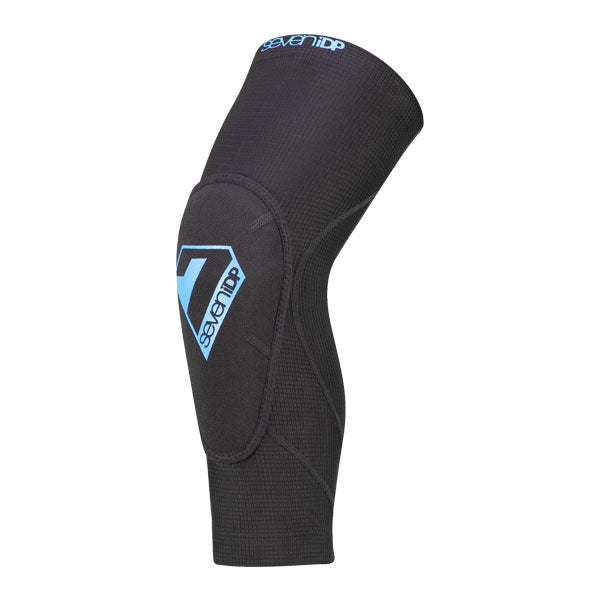
Sam Hill Lite Knee
All the Sam Hill DNA in a slimmer, lower-profile format. Lighter and more ventilated than the full Sam Hill, making it the go-to for longer trail days where you want capable protection without extra bulk.
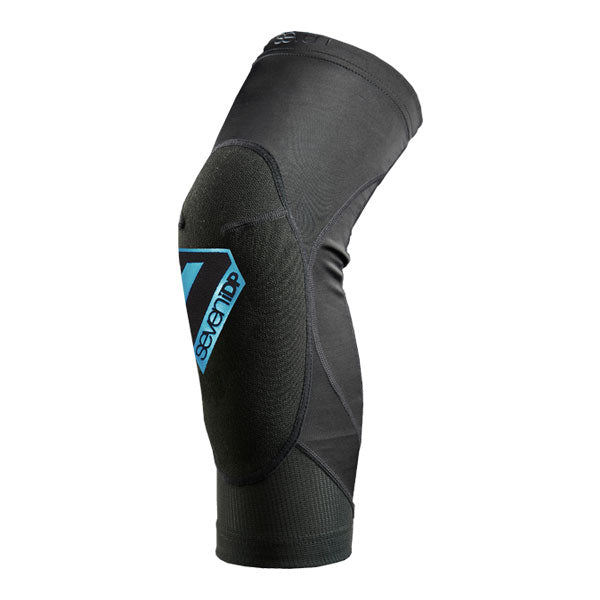
Transition Knee
The ideal starting point. CE Level 2 protection in a lightweight, affordable package. If you're new to wearing pads or want a spare set to leave in the van, the Transition delivers on the essentials without overcomplicating things.
How to size your knee pads
Getting the right size is the single most important factor in how comfortable a pad is on the trail. A pad that's too loose will migrate during a ride; one that's too tight will restrict blood flow and pedalling efficiency.
Measure the circumference of your lower thigh, 6 inches (15.25cm) above the kneecap. Use a soft tape measure and take the reading in both inches and centimetres. Use the table below for the 7iDP Sam Hill and Project ranges:
| Size | Thigh (inches) | Thigh (cm) | Best for |
|---|---|---|---|
| Small | 15 – 17" | 38 – 43 cm | Lean build / youth |
| Medium | 17 – 19" | 43 – 48 cm | Average build |
| Large | 19 – 21" | 48 – 53 cm | Larger build |
| X-Large | 21 – 23" | 53 – 58 cm | XL build |
If you're between sizes, a slightly snugger fit is usually better than looser — the sleeve material has some stretch, and pads tend to bed in after a few rides.
Lifetime Crash Replacement Policy
Every 7iDP knee pad comes with our Lifetime Crash Replacement Policy. If you crash and damage your pads, we'll give you a 50% discount on a replacement because if you're crashing hard enough to damage your pads, they did their job.
Find out moreFrequently asked questions
Yes. All 7iDP knee pads are certified to CE EN1621-1:2012 Level 2, the standard required for racing at UCI Downhill events and the Enduro World Series. Whether you're a weekend trail rider or competing at the sharp end of the results sheet, the protection level is the same.
Slipping is almost always a sizing issue — pads that are too large will migrate on the trail regardless of any grippers or straps. Check your thigh circumference against the size guide and consider sizing down if you're between sizes. A slightly snug fit is preferable to a loose one.
It's also worth checking that the pad is positioned correctly before you start riding — the centre of the pad should sit directly over the kneecap, not above it.
Yes. The Sam Hill Knee features a removable pad that can be taken out before washing the sleeve, which helps prolong the life of the foam. For all 7iDP pads, we recommend hand washing in cold water with a mild detergent. Avoid machine washing on hot cycles, tumble drying, or leaving pads in direct sunlight for extended periods, as this can degrade the foam's protective properties over time.
Sas-Tec is a viscoelastic polymer foam used in the Sam Hill Knee pads. Like D3O, it behaves differently under different conditions — soft and pliable in normal use, it stiffens rapidly on impact to absorb and dissipate energy before it reaches your body. It also moulds gently with body heat, improving comfort the longer you wear it. The pad sits in a removable pocket, making it easy to clean.
Both levels are tested to the CE EN1621-1:2012 standard, but they differ in the amount of force allowed to pass through the pad. Level 1 pads allow up to 35kN of transmitted force; Level 2 pads limit this to 20kN. In practice, Level 2 pads absorb significantly more energy on impact, which makes a real difference in high-speed crashes or hard impacts against rocks and roots.
All 7iDP knee pads are certified to Level 2 — the same standard required for professional racing.
Modern sleeve-style pads — including the entire 7iDP range — are designed to move with the knee, not against it. The four-way stretch fabrics and ergonomically profiled pads mean that pedalling efficiency is barely affected once the pads are properly sized and positioned. The first ride or two can feel slightly unusual, but most riders adapt quickly and stop noticing them altogether. That's precisely the goal.
Your knees are among the most vulnerable parts of your body on a mountain bike. They hit the ground first on most falls, take the full force of root strikes, and take months to recover from serious injury. Yet plenty of riders still head out without them — usually because they've worn a pair that was hot, heavy, or slipped down after ten minutes on the trail.
The good news is that modern MTB knee pads bear almost no resemblance to the stiff, plastic-wrapped contraptions of a decade ago. Done right, a quality pair should be comfortable enough that you genuinely forget you're wearing them — until they save your skin on that awkward line you should probably have walked.
This guide covers everything you need to know: certification standards, pad types, what to look for when buying, and which 7iDP pad is right for your riding. Let's get into it.
Do you need knee pads for mountain biking?
The short answer is yes — for most riders, most of the time. Knee injuries are among the most common in mountain biking, and a significant percentage are preventable with the right protection. That doesn't mean you need full armour for a gentle forest loop, but if you're riding anything with technical features, drops, roots, or descents, a lightweight knee pad is an easy win.
Well-designed mountain bike knee pads shouldn't interfere with your riding enjoyment, but be there to protect when needed. Comfortable, unobtrusive, and built to CE Level 2 certification — that's the standard we hold ourselves to, whether you're lapping a bike park or riding your local trail centre on a Saturday afternoon.
Even if you're an experienced rider who rarely crashes, the crashes that do happen tend to be unpredictable. Sniper roots, unexpected rock lips, and mechanical failures don't announce themselves. Good pads are cheap insurance.
Understanding knee pad certifications
All reputable MTB knee pads are tested to the EN 1621-1:2012 standard — the European certification for motorcycle and cycling limb protectors. The standard defines two levels of protection based on how much impact force is transmitted through the pad to your body:
Adequate protection for trail and XC riding. Good breathability and pedalling freedom. Best for riders who want lightweight coverage on mellow terrain.
The standard required for UCI Downhill and Enduro World Series racing. Absorbs significantly more energy on impact. The benchmark for any serious trail, enduro, or bike park rider.
The certification also includes a Type rating — Type A covers the primary impact zone of the knee, while Type B extends coverage further up the thigh and down the shin. 7iDP knee pads are certified to Level 2, Type B — the highest available standard, providing broader coverage without the bulk you'd typically associate with that level of protection.
Types of MTB knee pad
Sleeve-style pads
The most common type for trail and enduro riding. A stretch fabric sleeve holds the pad snugly against your knee without separate straps. They're easy to pull on and off, lighter weight, and generally more comfortable for long pedalling days. The trade-off is that they rely on the fabric grip to stay in place, so getting the right size is crucial.
Strap-and-shell pads
Hard outer shell with foam or polymer inner padding, held in place with velcro or buckle straps. Offer more protection for aggressive riding or bike park days where serious impacts are more likely. Bulkier and less comfortable for climbing, but excellent if you're mostly chair-lift-assisted or shuttling.
Hybrid designs
Many modern enduro pads split the difference — a flexible sleeve construction with a harder CE-certified pad insert. The 7iDP range takes this approach, combining a breathable sleeve with Sas-Tec or similar viscoelastic foam that stays soft and flexible during normal riding but hardens on impact. You get the comfort of a sleeve with protection closer to a hard-shell pad.
What to look for when buying
-
CE certification levelFor trail riding, Level 1 is acceptable. For anything technical, fast, or at a bike park, go Level 2. All 7iDP knee pads are CE EN1621-1:2012 Level 2.
-
Fit and sizingA knee pad that slips, bunches, or rotates on the trail is more than just annoying — it won't protect you properly. Measure your thigh circumference and refer to the manufacturer's size guide. When in doubt, size up for thicker legs and down for a snugger fit.
-
BreathabilityMesh back panels and perforated pad materials make a huge difference on longer rides or warm days. Look for four-way stretch fabrics and ventilated pad construction.
-
Pad material and coverageViscoelastic foams like Sas-Tec and D3O stay pliable in normal use but stiffen on impact. Hard-shell plastic caps offer more rigid protection. Coverage area — how far up the thigh and down the shin the pad extends — varies between models.
-
WeightLighter pads are easier to pedal in but typically sacrifice some protection. Most quality enduro pads sit between 200g and 350g per pad. Don't obsess over a 30g difference — comfort matters more.
-
Ease of maintenanceRemovable pads that can be taken out for washing are a nice touch and help extend the life of the product.
Which knee pad for which rider?
There's no single right answer, but your riding style and terrain should guide your choice. Here's a quick breakdown:
Comfort and breathability over maximum protection. A quality Level 2 sleeve pad is ideal — protection when you need it, barely noticeable when you don't.
You need pads you can pedal in all day but that will take a serious hit. Signature-model pads with Sas-Tec or similar foam hit this balance well.
When the stakes are highest, reach for the highest-spec pad in your budget. Level 2, Type B with hard shell cap and extended shin coverage.
Getting pads on early builds good habits. Focus on finding a well-fitting pad the rider will actually keep on. Comfort drives compliance.
7iDP MTB Knee Pads
Every 7iDP knee pad is CE EN1621-1:2012 Level 2 certified and backed by our Lifetime Crash Replacement Policy.
Project Knee
The top of the 7iDP range. Hard shell cap with viscoelastic foam liner, extended shin coverage, and a four-way stretch sleeve. Built for riders who want maximum protection without sacrificing pedalling comfort.
Sam Hill Knee
Designed in collaboration with three-time EWS champion Sam Hill. Sas-Tec viscoelastic pad in a removable pocket, breathable mesh rear panel, and a unique sock design that adds lateral coverage beyond the CE mandatory zones.
Sam Hill Lite Knee
All the Sam Hill DNA in a slimmer, lower-profile format. Lighter and more ventilated than the full Sam Hill, making it the go-to for longer trail days where you want capable protection without extra bulk.
Transition Knee
The ideal starting point. CE Level 2 protection in a lightweight, affordable package. If you're new to wearing pads or want a spare set to leave in the van, the Transition delivers on the essentials without overcomplicating things.
How to size your knee pads
Getting the right size is the single most important factor in how comfortable a pad is on the trail. A pad that's too loose will migrate during a ride; one that's too tight will restrict blood flow and pedalling efficiency.
Measure the circumference of your lower thigh, 6 inches (15.25cm) above the kneecap. Use a soft tape measure and take the reading in both inches and centimetres. Use the table below for the 7iDP Sam Hill and Project ranges:
| Size | Thigh (inches) | Thigh (cm) | Best for |
|---|---|---|---|
| Small | 15 – 17" | 38 – 43 cm | Lean build / youth |
| Medium | 17 – 19" | 43 – 48 cm | Average build |
| Large | 19 – 21" | 48 – 53 cm | Larger build |
| X-Large | 21 – 23" | 53 – 58 cm | XL build |
If you're between sizes, a slightly snugger fit is usually better than looser — the sleeve material has some stretch, and pads tend to bed in after a few rides.
Lifetime Crash Replacement Policy
Every 7iDP knee pad comes with our Lifetime Crash Replacement Policy. If you crash and damage your pads, we'll give you a 50% discount on a replacement because if you're crashing hard enough to damage your pads, they did their job.
Find out moreFrequently asked questions
Yes. All 7iDP knee pads are certified to CE EN1621-1:2012 Level 2, the standard required for racing at UCI Downhill events and the Enduro World Series. Whether you're a weekend trail rider or competing at the sharp end of the results sheet, the protection level is the same.
Slipping is almost always a sizing issue — pads that are too large will migrate on the trail regardless of any grippers or straps. Check your thigh circumference against the size guide and consider sizing down if you're between sizes. A slightly snug fit is preferable to a loose one.
It's also worth checking that the pad is positioned correctly before you start riding — the centre of the pad should sit directly over the kneecap, not above it.
Yes. The Sam Hill Knee features a removable pad that can be taken out before washing the sleeve, which helps prolong the life of the foam. For all 7iDP pads, we recommend hand washing in cold water with a mild detergent. Avoid machine washing on hot cycles, tumble drying, or leaving pads in direct sunlight for extended periods, as this can degrade the foam's protective properties over time.
Sas-Tec is a viscoelastic polymer foam used in the Sam Hill Knee pads. Like D3O, it behaves differently under different conditions — soft and pliable in normal use, it stiffens rapidly on impact to absorb and dissipate energy before it reaches your body. It also moulds gently with body heat, improving comfort the longer you wear it. The pad sits in a removable pocket, making it easy to clean.
Both levels are tested to the CE EN1621-1:2012 standard, but they differ in the amount of force allowed to pass through the pad. Level 1 pads allow up to 35kN of transmitted force; Level 2 pads limit this to 20kN. In practice, Level 2 pads absorb significantly more energy on impact, which makes a real difference in high-speed crashes or hard impacts against rocks and roots.
All 7iDP knee pads are certified to Level 2 — the same standard required for professional racing.
Modern sleeve-style pads — including the entire 7iDP range — are designed to move with the knee, not against it. The four-way stretch fabrics and ergonomically profiled pads mean that pedalling efficiency is barely affected once the pads are properly sized and positioned. The first ride or two can feel slightly unusual, but most riders adapt quickly and stop noticing them altogether. That's precisely the goal.