


CE Level 1 vs Level 2 Knee Pads: What's the Difference?
If you've been shopping for MTB knee pads recently, you've probably seen the terms CE Level 1 and CE Level 2 on product listings. They appear on spec sheets, in reviews, and on the pads themselves — but what do they actually mean, and does the difference matter for the type of riding you do?
The short answer is yes, it matters quite a lot. Understanding the certification gives you a reliable, objective way to compare protection levels across different brands and models, cutting through marketing language to what the numbers actually tell you.
Here's everything you need to know.
What is CE EN1621-1:2012?
EN1621-1:2012 is the European standard for impact protection in motorcycle and cycling limb protectors. The "EN" stands for European Norm, and the standard is maintained by the European Committee for Standardisation. It is the benchmark test that all reputable MTB knee pads are certified against before going to market.
The test works by dropping a weighted striker onto the pad at a defined velocity, then measuring how much of that impact energy passes through to the other side. That transmitted force — measured in kilonewtons (kN) — determines which protection level the pad qualifies for.
CE certification is the only truly objective measure of protection you can compare between products. A pad can look well-built, use premium materials, and carry a high price tag — but without a certified test result, you have no way of knowing how much energy it will actually absorb in a crash. Always check for the CE mark and the level it's certified to.
Level 1 vs Level 2: the key difference
Both levels are tested to the same standard — the difference is in the maximum amount of force that is allowed to be transmitted through the pad to the rider's body.
The pad must transmit no more than 35 kilonewtons of force on average, with no single reading exceeding 50 kN.
The pad must transmit no more than 20 kilonewtons of force on average, with no single reading exceeding 30 kN.
In plain terms: a CE Level 2 pad absorbs significantly more impact energy than a Level 1 pad. With the average transmission threshold 43% lower, the difference in real-world protection is meaningful — particularly in high-speed or high-impact crashes where the forces involved are well beyond what you'd encounter on a gentle trail.
Level 2 is also the standard required for competing at UCI Downhill events and the Enduro World Series. When the sport's governing body mandates a minimum certification, that tells you something about where the line is between adequate and serious protection.
Beyond the numbers: what else changes?
Type A vs Type B: coverage area
Alongside the Level rating, the standard also defines two Type classifications that relate to how much of the knee and surrounding area is covered by the protective pad.
Covers the primary impact zone of the knee — the kneecap and the area immediately around it. Provides the minimum required coverage to pass the standard. Found on lighter, more minimal pad designs.
Extends protection further up the thigh and down the shin, covering lateral impact zones beyond the CE mandatory area. Provides better all-round protection for off-axis impacts and irregular terrain. All 7iDP knee pads are Type B.
The full certification to look for on a serious MTB knee pad is CE EN1621-1:2012 Level 2, Type B. This is the highest available rating under the standard and the one that all 7iDP knee pads carry.
Which level do you need?
The honest answer for most mountain bikers is Level 2. The weight and comfort penalty between Level 1 and Level 2 has narrowed significantly as pad technology has improved, and the protection gap remains substantial. Unless you're doing something very low-key, it's hard to justify accepting less protection.
| Riding type | Minimum recommended | Notes |
|---|---|---|
| Gentle XC / casual trail | Level 1 | Low speeds, softer terrain — Level 1 provides meaningful protection for low-energy falls |
| Technical trail riding | Level 2 | Roots, rocks, and faster terrain increase the likelihood and severity of impacts |
| Enduro / all-mountain | Level 2 | Required for EWS racing; essential for hard descents combined with full-day pedalling |
| Downhill / bike park | Level 2 | Required for UCI DH racing; high speeds make maximum protection the sensible choice |
| Kids / beginners | Level 2 | Newer riders fall more often and less predictably — the best reason to start with the better pad |
Every 7iDP Knee Pad in the Range
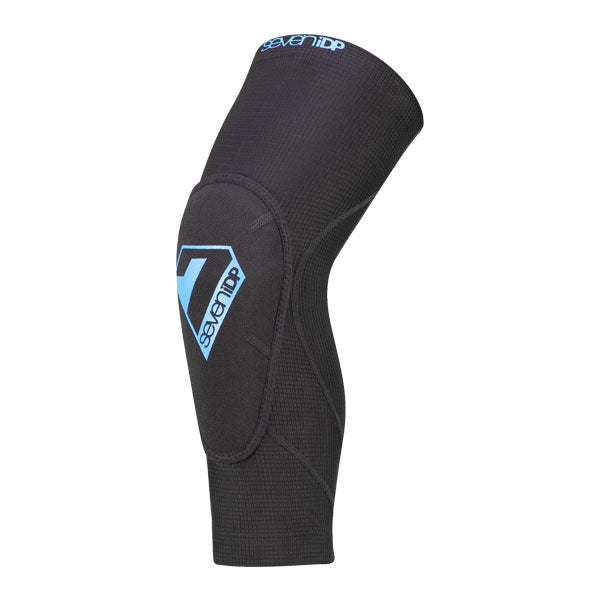
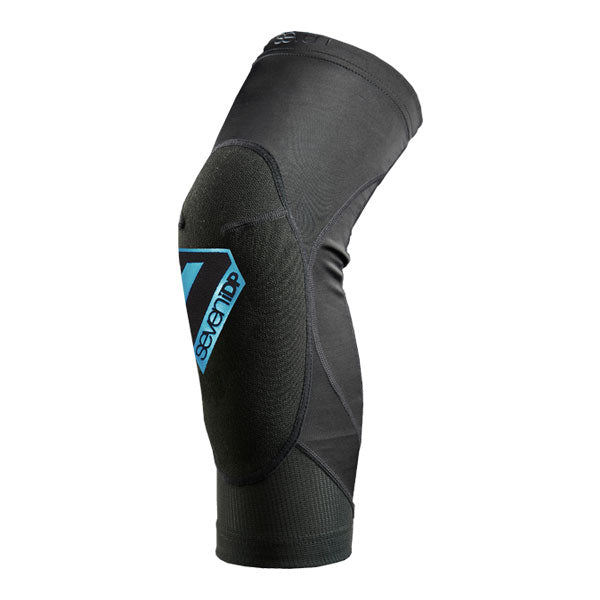
We don't make Level 1 pads. Every knee pad in the 7iDP range is certified to CE EN1621-1:2012 Level 2, Type B — the same standard required for UCI and EWS racing.


Lifetime Crash Replacement Policy
Every 7iDP knee pad comes with our Lifetime Crash Replacement Policy. If you crash and damage your pads, we'll give you a 50% discount on a replacement — because if you're crashing hard enough to damage your pads, they did their job.
Find out moreFrequently asked questions
In some older or budget pad designs, yes — Level 2 pads were traditionally bulkier and heavier than their Level 1 counterparts. Modern pad technologies, including the viscoelastic foams used in the 7iDP range, have largely closed that gap. The Sam Hill Lite Knee, for example, achieves CE Level 2 certification at just 6mm of pad thickness — thinner than many Level 1 pads from other brands.
Yes. The Enduro World Series mandates CE EN1621-1 Level 2 certified knee protection for all competitors. The same applies at UCI Downhill events. If you're racing at any sanctioned event, check the rules for your specific series — but Level 2 is the safe assumption at any competitive level.
Some brands use this phrase on products that meet the Level 2 standard by a significant margin — meaning the pad transmits considerably less than the 20 kN maximum allowed. It's a legitimate performance claim but not a separate certification tier. CE EN1621-1:2012 Level 2 remains the highest certified level available under the current standard; anything beyond that is marketing language, not a new certification category.
The certification itself doesn't expire — it applies to a specific product design as tested. However, the protective foam in knee pads can degrade over time, particularly if exposed to heat, UV light, or harsh cleaning chemicals. A pad that was certified to Level 2 when new may not perform to that standard after several years of heavy use or poor storage. As a rough guide, most manufacturers recommend replacing knee pads every two to three years with regular use, or immediately after any significant impact.
CE certification is required for Personal Protective Equipment (PPE) sold within the UK and European markets, and reputable brands will always carry it. That said, uncertified products do exist, particularly at the very low end of the market or on unregulated third-party marketplaces. If a product doesn't carry a CE mark and a stated certification level, treat the protection claims with scepticism.