


How to Size & Fit MTB Knee Pads: A Step-by-Step Guide
A well-designed knee pad that's the wrong size is next to useless. If it's too loose it'll migrate down your shin within five minutes of riding, leaving your knee exposed precisely when you need it most. Too tight and you'll lose circulation on climbs, find yourself stopping to adjust, or simply leave the pads in the van.
Getting the right fit is the single most important factor in how comfortable and effective your pads are — more than material, more than brand, and arguably more than protection level. A correctly sized pad stays where it should, moves with your knee, and genuinely protects you when you crash.
Here's how to get it right first time.
What you need before you start
Measuring for knee pads is straightforward and takes less than two minutes. You'll need:
A soft fabric tape measure (a dressmaker's tape is ideal), a pen, and something to note down the measurement. A rigid ruler or metal tape won't work — you need something that can wrap around the circumference of your leg.
If you don't have a soft tape measure, a piece of string and a ruler works perfectly well — wrap the string around your thigh, mark or pinch where it meets, then lay it flat against the ruler to get the measurement.
How to measure for knee pads: step by step
Take the measurement standing, not sitting. A bent knee will give you a different circumference and lead to an inaccurate result.
Find the centre of your kneecap and use it as your reference point. This is the anchor for the measurement.
Place your tape measure at the centre of the kneecap and measure 6 inches (15.25cm) straight up the thigh. Mark this point — this is where you'll take your circumference measurement.
Wrap the soft tape measure around the full circumference of your thigh at the marked point. Keep the tape snug but not tight — it should sit flat against the skin without compressing the muscle.
Read the measurement where the tape overlaps and write it down. Having both units is useful if you're comparing size charts from different manufacturers.
It's surprisingly common for legs to differ slightly in circumference. Measure both and use the larger of the two measurements when selecting your size.
Always measure bare skin, not over riding shorts or base layers. Fabric adds circumference and will push you into a larger size than you actually need.
7iDP knee pad size chart
Use your lower thigh circumference measurement — taken 6 inches above the kneecap — to find your size in the table below. This chart applies to the Sam Hill Knee, Sam Hill Lite Knee, Project Knee, and Transition Knee.
| Size | Thigh circumference (inches) | Thigh circumference (cm) |
|---|---|---|
| Small | 15 – 17" | 38 – 43 cm |
| Medium | 17 – 19" | 43 – 48 cm |
| Large | 19 – 21" | 48 – 53 cm |
| X-Large | 21 – 23" | 53 – 58 cm |
If you fall exactly on the boundary between two sizes, we recommend sizing down. The sleeve material has some stretch and will accommodate the snugger fit — pads that are slightly too snug are far preferable to pads that migrate on the trail.
How a well-fitted knee pad should feel
Once the pads are on, take a moment to assess the fit before you head out. A correctly sized pad has a distinct feel — here's what to look and feel for.
- +Snug all the way around the thigh with no loose fabric bunching
- +Kneecap cup sits directly over the centre of the kneecap
- +You can bend and straighten your leg freely without restriction
- +No numbness or tingling after five minutes of wear
- +The pad stays in position when you squat or lunge
- +Comfortable enough to forget it's there within a few minutes
- -Loose around the thigh — the sleeve rotates or slides easily
- -Kneecap cup sits above or below the actual kneecap
- -Noticeable restriction when bending the knee fully
- -Pins and needles or a feeling of the leg going numb
- -The pad creeps down the shin when you walk or pedal
- -Constant awareness of the pad — it's a distraction, not a background item
Positioning the pad correctly
Even a perfectly sized pad can underperform if it isn't positioned correctly before you ride. The most common mistake is wearing the pad too low — with the protective cup sitting on the shin rather than over the knee. This happens because the sleeve is easier to pull on that way, but it means the pad won't cover the kneecap in a direct impact.
The right position
Pull the pad on from the foot end, then slide it up the leg so the centre of the protective cup sits directly over the centre of your kneecap. The top of the sleeve should sit well up the thigh — higher than feels natural if you're used to wearing pads lower. Once in position, the silicone gripper strips inside the top and bottom cuffs will hold it there.
A useful check: stand normally and look down. You should see the centre of the pad lined up with your kneecap. Bend your knee slightly — the cup should flex with your knee and stay centred, not shift upward.
Common fit problems and how to fix them
Find Your 7iDP Knee Pad
All 7iDP knee pads are available in Small, Medium, Large, and X-Large. Every pad is CE EN1621-1:2012 Level 2 certified and backed by our Lifetime Crash Replacement Policy.


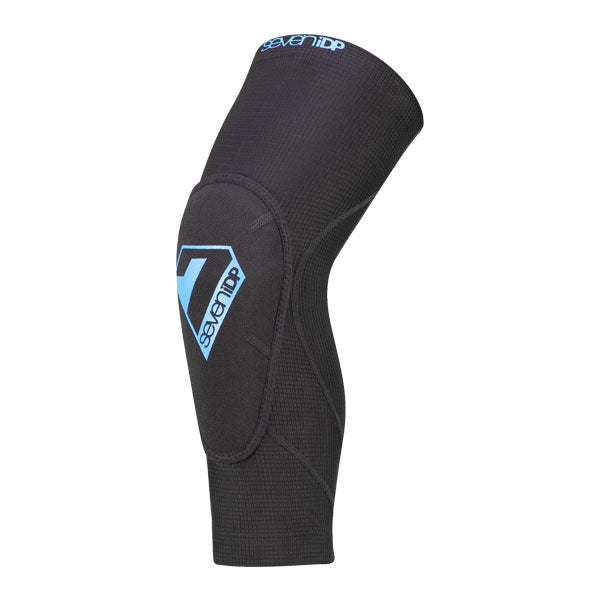
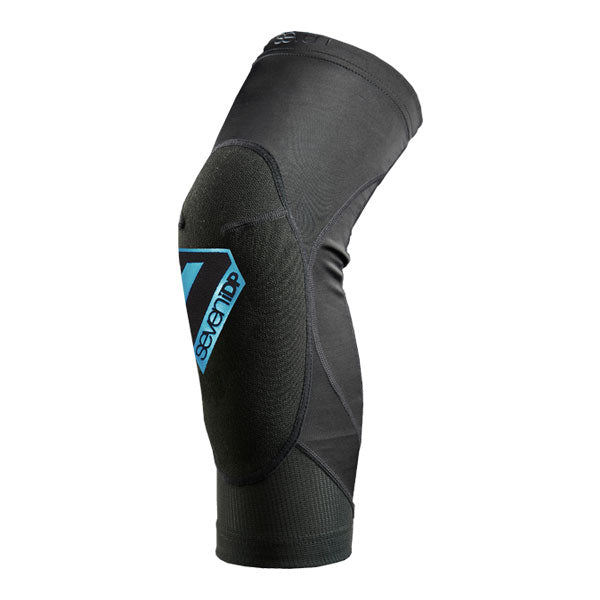
Lifetime Crash Replacement Policy
Every 7iDP knee pad comes with our Lifetime Crash Replacement Policy. If you crash and damage your pads, we'll give you a 50% discount on a replacement — because if you're crashing hard enough to damage your pads, they did their job.
Find out moreFrequently asked questions
Always measure with your leg straight and your weight evenly distributed. A bent knee changes the shape and circumference of the thigh, which will produce an inaccurate measurement. Stand naturally, tape measure the lower thigh at the correct height, and note the result.
Size down. A snugger fit is preferable to a looser one — the sleeve material stretches and will accommodate the fit, and the pad will stay in position better on the trail. The exception is if you have particularly thick or muscular thighs relative to overall leg size, where the larger size may be more comfortable for extended wear.
Yes, slightly. The four-way stretch fabric used in the sleeve will relax a little after the first several rides. A pad that feels noticeably snug initially will often settle into a comfortable fit once the fabric has broken in. If a pad feels uncomfortably tight — restricting blood flow or range of motion — rather than just snug, size up rather than waiting for it to stretch out.
Both work, though wearing pads under shorts is generally more secure. Tucking the top of the pad under bib shorts or a liner short helps the silicone grippers get purchase against a static surface, which significantly reduces migration. Wearing over baggy shorts is fine too — some riders prefer it for quick removal — but grip is slightly reduced. Whichever you choose, measure bare skin for sizing purposes.
No — the Youth Transition Knee and Kid's Transition Knee have their own size guides based on age and leg circumference. Always check the specific size chart on the product page for youth and children's pads, as the sizing ranges differ from the adult range. The same measuring technique applies: lower thigh circumference taken 6 inches above the kneecap.